Steam-first libraries
Many single-player, indie, and mainstream games work well through native Linux builds or Proton. Steam handles the compatibility layer and controller mapping.
Build around the games you actually play, not the claim that “everything works.”
Many single-player, indie, and mainstream games work well through native Linux builds or Proton. Steam handles the compatibility layer and controller mapping.
Kernel-level anti-cheat, publisher policy, and launcher changes can block Linux even when the game engine itself runs.

Hardware ecosystems, DRM, and day-one patches can make Windows the dependable option for specific titles.
| Layer | What it does | Use it when |
|---|---|---|
| Native Linux game | Developer ships a Linux build | The current native build is maintained and performs well |
| Steam Play / Proton | Runs many Windows Steam games through Valve’s compatibility technology | You want the simplest supported Steam workflow |
| Proton Experimental | Tests newer compatibility fixes | A recent title needs a fix not yet in the stable selection |
| Proton GE | Community build with additional patches and codecs | Only when a trusted game-specific guide recommends it; it is not Valve’s official build |
| Lutris | Organizes games and runners from multiple sources | You understand per-game configuration and non-Steam launchers |
| Heroic Games Launcher | Open-source launcher for supported external stores | You need a Linux-friendly interface for a compatible non-Steam library |
Valve’s official Steam download and platform information.
steampowered.com ↗Official open-source Proton project and release notes.
github.com/ValveSoftware/Proton ↗
Community compatibility reports; verify recency and matching hardware.
protondb.com ↗
Open gaming platform for experienced multi-launcher setups.
lutris.net ↗
Open-source launcher for supported external game libraries.
heroicgameslauncher.com ↗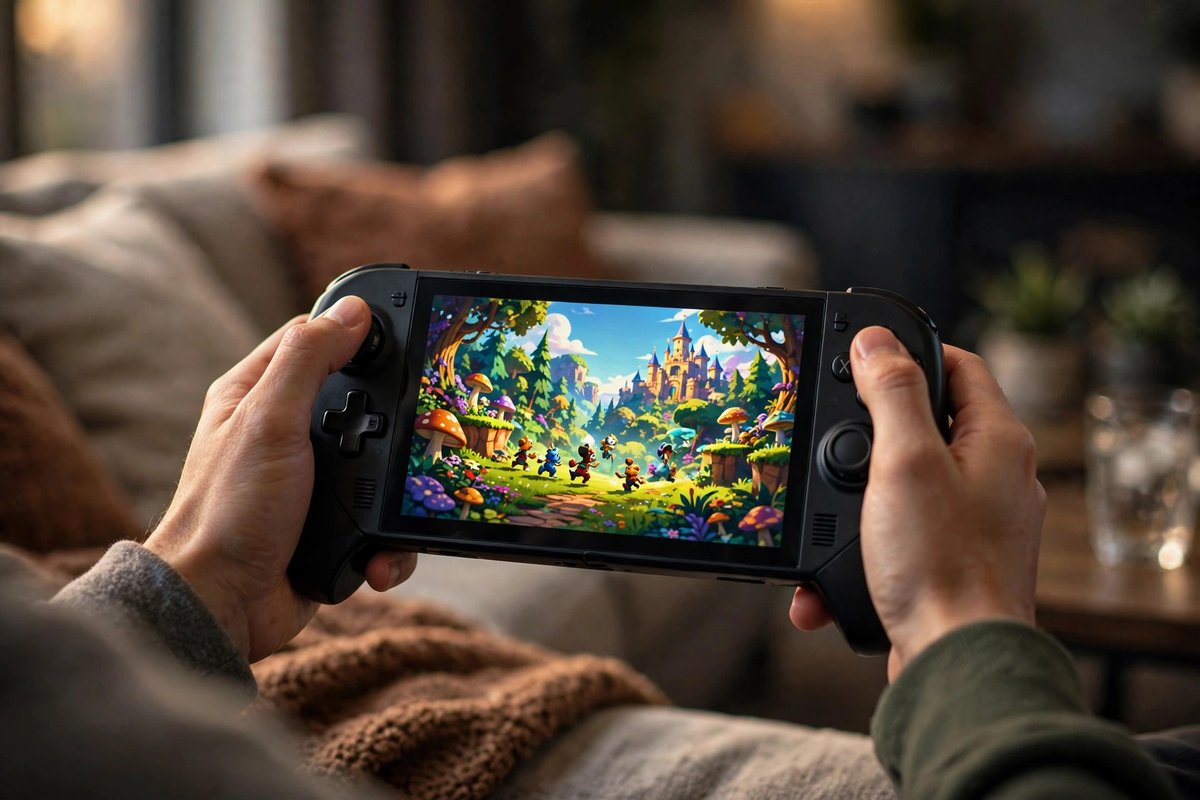
Valve’s compatibility categories help, but desktop hardware can differ.
steamdeck.com ↗
Useful for backups and portable game storage when the exact filesystem and launcher support your workflow.
Compare gaming SSDs
Prefer standard layouts with broad Steam Input support; verify wireless behavior on the target distribution.
Compare PC controllers
Simple USB or 3.5 mm audio usually travels better than features tied to Windows-only control software.
Compare gaming headsetsProton is Valve’s compatibility technology for running many Windows games through Steam on Linux. It combines Wine and other components, but compatibility varies by game, anti-cheat system, launcher, hardware, and Proton version.
No. Many do, but some fail because of anti-cheat systems, launchers, DRM, unsupported codecs, or game-specific bugs. Check the Steam store page, Steam Deck compatibility information, and recent community reports.
Both can work well. Driver installation, feature support, laptop hybrid graphics, and the exact game matter more than brand alone. Confirm current distribution guidance for the exact GPU.
Yes. Many users keep Windows on another drive or partition for unsupported games. Back up first and understand the disk layout before creating a dual-boot setup.