🧪 Epoxy 101

New to epoxy? Start here. What resin actually is, the deep pour vs tabletop distinction that decides your whole build, the safety that matters, and the mistakes that ruin first pours.

What Epoxy Resin Actually Is

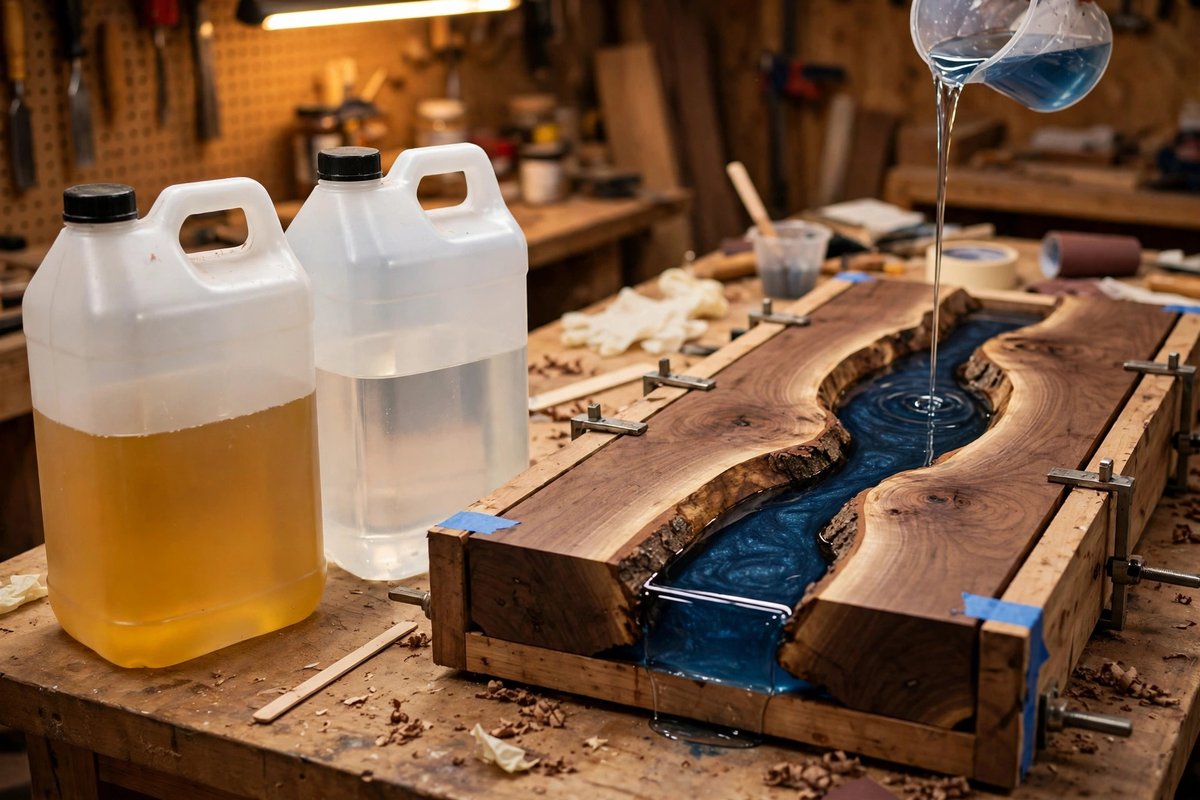
Deep pour epoxy beside a walnut river table pour

🌊 Two Parts, One Reaction

Epoxy is two liquids — resin and hardener — that cure into solid plastic when mixed. The reaction gives off heat (exothermic cure), which is why thick pours behave so differently from thin ones, and why the clock starts the moment you mix.

⏱️ Working Time vs Cure Time

Working time is how long you can pour and shape it (often 30–60 minutes for tabletop, hours for deep pour). Cure time is how long until it is hard — and full hardness can take days after it feels dry. Rushing the second one is how soft spots happen.

🌡️ Why Temperature Matters

Resin likes a 70–80°F room. Cold resin turns thick, traps air, and can cure cloudy. Warm resin flows thin and releases bubbles — but cures faster, so your working time shrinks. The room is part of the recipe.

Deep Pour vs Tabletop: The One Decision That Matters

🌊 Deep Pour

Slow-curing casting resin made to pour inches thick in one layer without overheating or cracking. This is the epoxy that becomes the river between your slabs.

✨ Tabletop

A thick, self-leveling coating resin that floods on thin (about 1/8 inch) and cures to a hard, glassy skin. This is the finish coat — bar tops, counters, and the final flood over a cured deep pour.

⚠️ The #1 Beginner Mistake

Tabletop resin poured 2 inches thick overheats, cracks, and can smoke. Deep pour used as a finish coat stays soft too long and never quite hardens right. Match the resin to the job and most disasters never happen.

Safety That Actually Matters

🧤 Skin and Lungs

Uncured epoxy is a sensitizer: wear nitrile gloves, work with ventilation or a respirator, and never sand uncured resin. Repeated skin contact can build into an allergy that ends your resin hobby for good.

🔬 Uncured vs Cured

Cured epoxy is inert plastic. Uncured epoxy is a chemical you respect. Once a piece is fully cured, sanded, and finished, it is a different material from the liquids you poured.

🍽️ Food Contact

Only resins rated food-safe when cured belong near food — and only after a full cure. If the label does not say it, do not serve on it.

The Build Order for a River Table

1️⃣ Slab Prep & Mold

Wood must be dry, and the mold must be sealed and treated with mold release. A leaking mold is the most heartbreaking failure in this hobby — check every seam before a drop goes in.

2️⃣ Seal Coat

Brush a thin coat on the live edges and let it tack up before the deep pour. It seals the wood pores that would otherwise pump bubbles into your river for hours.

3️⃣ The Pour

Measure by volume, mix a full two minutes, scrape the sides of the cup, and pour. Ten minutes later, pass a torch or heat gun over the surface to pop bubbles — keep it moving so you never scorch the resin.

4️⃣ Cure, Flatten, Finish

Deep pours want 3–7 days before demolding and sanding. Then flatten, work through the sanding grits, and finish with a tabletop flood coat for that glass look.

Common First-Pour Problems

🫧 Bubbles That Won't Quit

Almost always unsealed wood or cold resin. Seal coat first, pour in a warm room, and torch the surface. A pressure pot helps for small castings but is not required for river tables.

☁️ Cloudy Finish or Blush

Moisture and humidity cause cloudiness and amine blush (a waxy film). Pour on dry days, and if blush appears, wash it off and sand before the next coat.

🟡 Soft Spots

A bad mix ratio or under-mixing leaves resin that never fully hardens. More time will not fix it — scrape the soft area out and redo that section properly mixed.

Ready to shop? See the picks →